Research Peptide Vendor Guides
Plain-English guides on research peptide vendors: how it works, what it costs and what to watch out for.
Working with a vial? Use our free peptide reconstitution calculator (U-100 and U-40, mcg per 0.1 mL).
- Guide
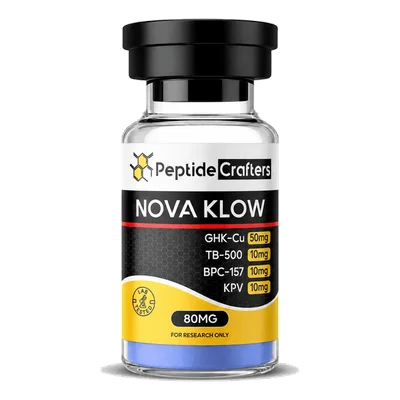
What Is the KLOW Peptide Blend? Components, Research and Cost (2026)
KLOW is a vendor trade name for an 80mg research vial of GHK-Cu, BPC-157, TB-500 and KPV. Here's what each component is, what the published research covers, its regulatory status and what KLOW costs in October 2026.
5 min read · Updated Oct 2026
- Guide
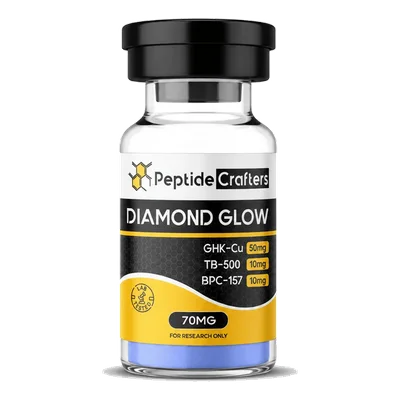
What Is the GLOW Peptide Blend? Ingredients, Research and Price (2026)
GLOW is a trade name for a 70mg research vial of GHK-Cu, BPC-157 and TB-500. We cover the ingredients and their variants, what the research covers, regulatory status, and what GLOW costs in October 2026.
5 min read · Updated Oct 2026
- Guide
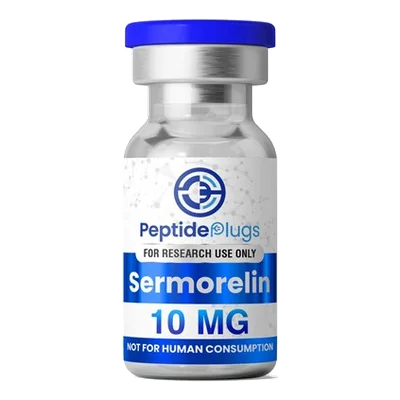
What Is Sermorelin? GHRH(1-29), the Geref History and Compounding Status (2026)
Sermorelin is the first 29 amino acids of growth hormone-releasing hormone. It was FDA-approved as Geref until 2009, when its approvals were withdrawn after the maker stopped selling it. Here's the history, the current regulatory picture and what research-labeled vials are.
4 min read · Updated Oct 2026
- Guide
Freedom Diagnostics Testing: What the Lab Tests and How to Verify Its COAs
Freedom Diagnostics Testing is a Franklin, Tennessee lab whose certificates show up on many research peptide sites. Here's what it tests, what its site does and doesn't claim, and how to check a report yourself.
5 min read · Updated Oct 2026
- Guide
Horizon Analytical: Peptide Testing Lab Profile, Prices and How to Verify a COA
Horizon Analytical sells LC-MS purity, identity and quantity testing for research peptides and runs a public report lookup. Its site doesn't give a legal name, address or accreditation.
4 min read · Updated Oct 2026
- Guide
MZ Biolabs: The Tucson Mass Spec Lab Behind Some Peptide COAs
MZ Biolabs is a Tucson, Arizona mass spectrometry lab whose purity and identity certificates appear on several peptide vendor sites. It doesn't publish a lookup portal, so checking a report takes a different route.
4 min read · Updated Oct 2026
- Guide
ILS Laboratories: Peptide Panels, Prices and How to Verify an ILS COA
ILS Laboratories is a San Diego lab that sells HPLC and full QC panels for research peptides and lets anyone verify a report with an access code. Here's what its tests cover and where the gaps are.
4 min read · Updated Oct 2026
- Guide
Janoshik Analytical: What the Lab Tests, Prices and How to Verify a Report
Janoshik is the lab name you'll see most on gray-market peptide certificates. Here's what its peptide tests cover, what the add-ons cost, how verification works and what a report can't tell you.
5 min read · Updated Oct 2026
- Guide
Chromate Lab: The Peptide Testing Lab Behind Chromate COAs, Prices and Verification
Chromate is a small New Hampshire lab, reached at chromate.org, that publishes per-compound HPLC prices for research peptides and posts results to a Verify portal. It's also a Finnrick partner lab.
4 min read · Updated Oct 2026
- Guide
Peptide Testing Labs (2026): Who Signs Vendor COAs, What They Test and How to Verify
Sixteen labs sign most of the certificates on research peptide sites. We compared where each one is, what accreditation it publishes, what a basic panel costs, how to verify a report and which vendors in our directory cite it.
4 min read · Updated Oct 2026
- Guide
Research Peptides Explained: What Each Compound Is and Where It Stands (2026)
Short, sourced explainers for 21 compounds sold as research peptides: what each one is, whether any version is approved, what regulators have said in 2026, and what to look for on a certificate.
3 min read · Updated Oct 2026
- Peptide vs peptide
Tesamorelin vs Sermorelin: Two GHRH Analogs Compared
Both act on the GHRH receptor. Tesamorelin is a modified full-length GHRH approved as Egrifta for HIV-associated abdominal fat; sermorelin is the unmodified 29-amino-acid fragment, approved as Geref until its 2008 discontinuation. Here's how they compare.
4 min read · Updated Oct 2026
- Guide
TikTok Peptide Ban (October 2026): What's Blocked, What Isn't, and Why
On October 20, 2026, TikTok users found that searching BPC-157, retatrutide, semaglutide and melanotan returned "No results found". Here's what is and isn't blocked, what TikTok has and hasn't said, and the regulatory backdrop.
4 min read · Updated Oct 2026
- Guide
What Is AOD-9604? The hGH Fragment, Its Failed Trials and FDA Status (2026)
AOD-9604 is a modified fragment of human growth hormone that an Australian company tested as an obesity drug until a trial failed in the mid-2000s. Here's what was published, how FDA's compounding advisers voted in 2024, and what to check on a research vial's COA.
5 min read · Updated Oct 2026
- Guide
What Is BPC-157? Evidence, FDA Status and WADA Ban (2026)
BPC-157 is a synthetic 15-amino-acid peptide based on a fragment of a gastric juice protein. Almost all of its evidence comes from animal studies. Here's where it stands with FDA and WADA as of October 2026.
5 min read · Updated Oct 2026
- Guide
What Is Cagrilintide? Novo's Amylin Analog, CagriSema Trials and FDA Status (2026)
Cagrilintide is Novo Nordisk's investigational long-acting amylin analog, studied alone and paired with semaglutide as CagriSema. Here's what the REDEFINE trials reported, where the FDA review stands in October 2026, and why compounding it is off the table.
4 min read · Updated Oct 2026
- Guide
What Is CJC-1295? With vs Without DAC, ConjuChem History and FDA Status (2026)
CJC-1295 is a modified GHRH(1-29) analog that ConjuChem designed to bind albumin and last for days. Here's what 'with DAC' and 'without DAC' mean, why development stopped in 2006, how FDA's compounding advisers voted in 2024, and what to check on a COA.
5 min read · Updated Oct 2026
- Guide
What Is Epitalon? The Khavinson Tetrapeptide and FDA's 2026 Vote
Epitalon is a synthetic four-amino-acid peptide modeled on a pineal gland extract studied by Vladimir Khavinson's group in Russia. Here's what the research covers, how FDA's compounding advisers voted in July 2026, what's happened since, and how to check a COA.
5 min read · Updated Oct 2026
- Guide
What Is GHK-Cu? Copper Peptide in Skin Care vs Research Vials, and FDA Status (2026)
GHK-Cu is a copper-binding tripeptide found in human plasma and sold both as a skin-care ingredient and in research vials. Here's what the evidence covers and how FDA treats each form as of October 2026.
5 min read · Updated Oct 2026
- Guide
What Is Hexarelin? Examorelin, Its Cardiac Research and Regulatory Status (2026)
Hexarelin, also called examorelin, is a synthetic growth hormone-releasing peptide studied in the 1990s and 2000s, including for direct effects on the heart. Here's what that research found, why it was never approved, and what research vials cost as of October 2026.
4 min read · Updated Oct 2026
- Guide
What Is Ipamorelin? Ghrelin Agonist, Failed Trials and FDA Status (2026)
Ipamorelin is a synthetic five-amino-acid ghrelin-receptor agonist discovered at Novo Nordisk. It failed to beat placebo in its only published phase 2 trial, was never approved, and remains on FDA's Category 2 list as of October 2026.
4 min read · Updated Oct 2026
- Guide
What Is KPV? The Alpha-MSH Tripeptide, Its Evidence and FDA Status (2026)
KPV is a three-amino-acid peptide (Lys-Pro-Val) taken from the tail end of alpha-MSH. Its evidence is preclinical, mostly mouse colitis studies. Here's what's published, where FDA's compounding review stands in October 2026, and what to check on a COA.
4 min read · Updated Oct 2026
- Guide
What Is Melanotan 2? MT-II, FDA and MHRA Warnings, and Afamelanotide
Melanotan II is a synthetic analog of alpha-MSH developed at the University of Arizona and sold online for tanning without any approval. Here's what the early study found, what FDA and the UK's MHRA have said, and how it differs from the approved drugs afamelanotide and bremelanotide.
5 min read · Updated Oct 2026
- Guide
What Is MOTS-c? The Mitochondrial Peptide, the Evidence and Its FDA Status (2026)
MOTS-c is a 16-amino-acid peptide encoded in mitochondrial DNA. Here's what the research actually covers, where FDA's compounding review stands as of October 2026, and why athletes can't use it.
5 min read · Updated Oct 2026
- Guide
What Is NAD+? The Coenzyme, Its FDA Status and Research Vials (2026)
NAD+ is a coenzyme every cell uses, not a peptide. Here's what it does, what the limited human research on injected NAD+ shows, where it stands with FDA as of October 2026, and what research-labeled vials look like.
5 min read · Updated Oct 2026
- Guide
What Is PT-141? Bremelanotide, the Vyleesi Approval and Research Vials (2026)
PT-141 is the research name for bremelanotide, the active ingredient in Vyleesi. Here's what FDA approved in 2019, what the trials showed, and why vials sold as research PT-141 are a different thing.
4 min read · Updated Oct 2026
- Guide
What Is Semaglutide? Ozempic, Wegovy, Rybelsus, Trials and FDA Status (2026)
Semaglutide is Novo Nordisk's GLP-1 receptor agonist, approved as Ozempic, Wegovy and Rybelsus. A sourced overview of its approvals, the STEP and SELECT trials, the end of the shortage and FDA's position on research-labeled semaglutide.
5 min read · Updated Oct 2026
- Guide
What Is Semax? ACTH(4-10) Analog, Russian Registration and US Status (2026)
Semax is a synthetic heptapeptide built from a fragment of ACTH and registered as a drug in Russia. Here's what the published research shows, why it isn't approved in the US, and where FDA's compounding review stands in October 2026.
5 min read · Updated Oct 2026
- Guide
What Is TB-500? Thymosin Beta-4 Fragment, Doping Bans and FDA Status (2026)
TB-500 is a synthetic fragment of thymosin beta-4 sold as a research chemical. Here's how it differs from the natural protein, what human evidence exists, why it's banned in sport, and where FDA stands as of October 2026.
5 min read · Updated Oct 2026
- Guide
What Is Tirzepatide? Mounjaro, Zepbound, Trials and FDA Status (2026)
Tirzepatide is Eli Lilly's dual GIP and GLP-1 receptor agonist, approved as Mounjaro and Zepbound. A sourced overview of its approvals, key trial results, the end of the shortage and FDA's warnings about research-labeled tirzepatide.
5 min read · Updated Oct 2026
- Guide
TrustPointe Analytics: Michigan Peptide Testing Lab Profile and COA Verification
TrustPointe Analytics LLC is a Michigan lab founded in 2023 that tests peptide potency, purity, endotoxin and microbiology. Its COAs carry a key you can check on its LIMS portal.
4 min read · Updated Oct 2026
- Guide
What Is IGF-1 LR3? Long R3 IGF-1, Mecasermin and Regulatory Status (2026)
IGF-1 LR3 (Long R3 IGF-1) is an engineered analog of insulin-like growth factor 1 made for cell culture. Here's how it differs from the approved drug mecasermin, where it stands with FDA and WADA, and what to check on a certificate.
5 min read · Updated Oct 2026
- Guide
What Is Tesamorelin? Egrifta, FDA Approval and Research Vials (2026)
Tesamorelin is a synthetic GHRH analog and the active ingredient of Egrifta, approved by FDA in 2010 for excess abdominal fat in adults with HIV and lipodystrophy. Here's what the trials showed, what the label warns about, and why a research-labeled vial isn't the approved drug.
4 min read · Updated Oct 2026
- Guide
Harrens Lab: Hayward Testing Lab Profile for Peptide COAs and Accreditation
Harrens Lab is a Hayward, California food, hemp and supplement lab with A2LA ISO/IEC 17025 accreditation that now tests peptides, mostly for Finnrick. Here's what its accreditation does and doesn't cover.
4 min read · Updated Oct 2026
- Guide
Krause Analytical: Austin Peptide Testing Lab Profile and COA Verification
Krause Analytical is a small Austin contract lab and Finnrick's busiest partner lab. It tests peptides by HPLC-UV and HPLC-MS and verifies COAs through an online form.
4 min read · Updated Oct 2026
- Guide
Vanguard Laboratory: A2LA Accreditation, Peptide Tests and COA Checks
Vanguard Laboratory is an A2LA-accredited lab in Olympia, Washington that also tests research peptides. Here's what the accreditation does and doesn't cover, what its peptide tiers include and how to check a report.
4 min read · Updated Oct 2026
- Guide
Eli Lilly Peptide Lawsuits (2026): Every Retatrutide Case, Who Was Sued and What It Means
Eli Lilly filed six lawsuits against retatrutide sellers on August 12, 2026 and five more on October 8, including online peptide vendors such as American Peptides. Here's every case we could verify, what Lilly alleges, and what it means for research-use-only sellers.
5 min read · Updated Oct 2026
- Guide
Kovera Labs: What the Peptide Lab Tests and How to Verify a Kovera COA
Kovera Labs is a Buffalo Grove, Illinois lab that tests research peptides for purity, net content and identity by LC-MS, with endotoxin, sterility and metals add-ons. Here's what it publishes and how to check a report.
4 min read · Updated Oct 2026
- Guide
BioRegen Lab: Peptide Testing, Prices and How to Verify a BioRegen COA
BioRegen tests research peptides by UPLC-MS and LAL endotoxin and publishes a COA number and key for each report. It doesn't publish an address or an accreditation. Here's what we could and couldn't confirm.
4 min read · Updated Oct 2026
- Guide
BT Labs (BTLabs): West Palm Beach Peptide Testing Lab Profile and COA Checks
BTLabs, at btlabtesting.com, is a Florida contract lab that tests peptides, supplements and other products. It's Finnrick's second-largest partner lab. Here's what its reports cover.
4 min read · Updated Oct 2026
- Guide
Bioviridian Peptide Testing Lab: Who It Is, What It Tests, How to Verify a COA
Bioviridian is a small Texas lab that tests research peptides by LC-MS and HPLC and posts COAs to a search page. It says ISO 17025 accreditation is still in progress.
5 min read · Updated Oct 2026
- Guide
Accumark Labs: Peptide Testing Lab Profile, Prices and COA Verification
Accumark Labs runs flat-rate HPLC identity, purity and quantity panels for research peptides and gives each report a verification code. Its ISO 17025 accreditation is listed as pending.
4 min read · Updated Oct 2026
- Guide
Is Retatrutide FDA Approved? Status, Filing Date and Timeline (October 2026)
Retatrutide is not FDA approved. Lilly has reported five phase 3 trials and plans to submit for US approval in the first quarter of 2027. Here is the dated timeline, what happens after filing, and what it means for vials sold as research retatrutide.
3 min read · Updated Oct 2026
- Guide
Ethos Analytics: The Phoenix Lab on Peptide COAs and How to Verify One
Ethos Analytics is a Phoenix, Arizona lab that tests supplements, foods and research peptides. Here's what its peptide certificates report, what its accreditation claim says, and how to check a report on its site.
4 min read · Updated Oct 2026
- Peptide vs peptide
Tesamorelin vs Ipamorelin: Approved Drug vs Research Peptide
Tesamorelin is an FDA-approved GHRH analog sold as Egrifta for HIV-associated abdominal fat. Ipamorelin is an unapproved ghrelin-receptor agonist that failed its only published Phase 2 trial and remains on FDA's Category 2 list. Here's how they compare.
4 min read · Updated Oct 2026
- Peptide vs peptide
Retatrutide vs Tirzepatide: Trials, Status and Mechanism
Tirzepatide (Mounjaro, Zepbound) is an FDA-approved dual GIP/GLP-1 agonist. Retatrutide is Lilly's investigational triple agonist, with Phase 3 results in 2025-2026 but no approval. Here's how the trials, mechanisms and regulatory status compare.
5 min read · Updated Oct 2026
- Guide
Peptide Confessions Review (2026): What the Anonymous Peptide Report Site Is
Peptide Confessions (peptideconfessions.com) is an anonymously run archive of moderated user reports about peptides and GLP-1 compounds. It's not a vendor and not a forum. Here's how it works, who sponsors it, what its data reports measure and where it fits next to lab testing.
5 min read · Updated Oct 2026
- Peptide vs peptide
Semax vs Selank: Origins, Research and Regulatory Status
Semax and selank are sister heptapeptides from the same Russian institute. Semax is an ACTH(4-10) analog studied in stroke and cognition; selank is a tuftsin analog studied as an anxiolytic. Neither is FDA-approved, and only semax was voted on by FDA's compounding advisers in 2026.
4 min read · Updated Oct 2026
- Peptide vs peptide
Ipamorelin vs Sermorelin: Two GH Pathways Compared
Ipamorelin and sermorelin both trigger growth hormone release, but through different receptors. Sermorelin was once FDA-approved as Geref; ipamorelin was never approved and remains on FDA's Category 2 list. Here's how the research and regulatory status compare.
4 min read · Updated Oct 2026
- Peptide vs peptide
CJC-1295 vs Sermorelin: GHRH Analogs Compared
Sermorelin is the first 29 amino acids of human GHRH and was once FDA-approved as Geref. CJC-1295 is a modified, albumin-binding version that was never approved. Here's how they differ, and why 'CJC-1295 without DAC' is a different molecule.
4 min read · Updated Oct 2026
- Guide
How to Choose a Peptide Vendor in 2026: A 10-Point Checklist (and Red Flags)
A 10-point checklist for vetting research peptide vendors: verifiable labs, lot-matched COAs, independent data, labeling, business details, FDA letters, payments, shutdown risk and lookalike domains, with how our eight listed vendors fare.
7 min read · Updated Oct 2026
- Guide
What Is Retatrutide? Research Status, Trials and FDA Position (2026)
Retatrutide is Eli Lilly's investigational triple hormone receptor agonist. A sourced overview of the published trials, where the phase 3 program stands, why it isn't approved, and how to check a research-labeled vial's COA.
5 min read · Updated Oct 2026
- Comparison
Bacteriostatic Water: What It Is, How It Differs From Sterile Water, and the 28-Day Rule
Both are sterile water for injection. Bacteriostatic water adds 0.9% benzyl alcohol so a vial can be entered more than once; sterile water has no preservative and is single-use.
5 min read · Updated Oct 2026
- Guide
How to Store Peptides: Lyophilized vs Reconstituted, Temperature, Light and Freeze-Thaw
Dry peptides keep longest cold, dark and sealed. Once dissolved they degrade faster, so store solutions cold, split them into aliquots and avoid repeated freeze-thaw cycles.
5 min read · Updated Oct 2026
- Guide
How to Verify a Janoshik Report: Step-by-Step Check and Edited-PDF Red Flags
A practical walk-through of Janoshik's verification tool: where the task number and key are, what a verified result looks like, how to compare the lab's copy with a vendor's PDF, and the signs of an edited report.
5 min read · Updated Oct 2026
- Peptide vs peptide
Semaglutide vs Tirzepatide: Trial Results Compared
Semaglutide (Ozempic, Wegovy) and tirzepatide (Mounjaro, Zepbound) are FDA-approved prescription drugs. In the SURMOUNT-5 head-to-head trial, tirzepatide produced more weight loss. Here's what the trials and labels say.
5 min read · Updated Oct 2026
- Guide
Peptide Shipping and Customs: Domestic vs International, FDA Detentions and Seizure Notices
International peptide parcels pass through customs and FDA screening, where unapproved drugs can be detained, refused or destroyed. Domestic shipments don't cross a border. Here's how the process works and why ship-from location matters.
6 min read · Updated Oct 2026
- Guide
How to Reconstitute Peptides: A Lab Procedure for Lyophilized Research Peptides (2026)
A bench-level walkthrough for dissolving a freeze-dried research peptide: what you need, how to keep the vial clean, how to add diluent without damaging the cake, and how to work out the concentration.
6 min read · Updated Oct 2026
- Guide
Lyophilized Peptides Explained: Freeze-Drying, the 'Puck', and What a Collapsed Cake Can Mean
Lyophilization removes water from a frozen product under vacuum so ice turns straight to vapor. Peptides ship this way because they are more stable dry. The cake's appearance is a rough check on how well that went.
5 min read · Updated Oct 2026
- Guide
Are Peptides Steroids? The Difference Explained
Peptides and steroids are different kinds of molecules with different legal status. Anabolic steroids are Schedule III controlled substances; most peptides aren't controlled, though many are banned in sport.
5 min read · Updated Oct 2026
- Guide
Peptide Laws by State (September 2026): Every Verified State Action, With Sources
Most states have no peptide-specific law, and federal FDA rules apply everywhere. We found a handful of verified state actions, mostly medical and pharmacy board notices aimed at clinics.
5 min read · Updated Oct 2026
- Comparison
U-100 Syringe vs U-40: Why 0.1 mL Is 10 Units on One and 4 Units on the Other
A 'unit' on a syringe is a division of the barrel, not a fixed amount. U-100 barrels mark 100 units per mL and U-40 barrels mark 40, so the same volume reads differently on each.
5 min read · Updated Oct 2026
- Guide
How Long Do Reconstituted Peptides Last? What Limits a Peptide Solution in the Lab
There's no single shelf life for a dissolved peptide. Manufacturer guides give about a week at 4 °C as a general figure, frozen aliquots for longer, and shorter times for sensitive sequences.
5 min read · Updated Oct 2026
- Guide
Endotoxin Testing for Peptides: LAL, rFC, EU Units and Which Vendors Publish Results
Endotoxin is a bacterial contaminant that HPLC can't see. It needs its own test, reported in endotoxin units, and only some research-peptide vendors publish it.
6 min read · Updated Oct 2026
- Guide
HPLC Purity Explained: What '99%' on a Peptide COA Measures (and What It Doesn't)
HPLC purity is the main peak's share of everything the detector saw. It doesn't prove identity, doesn't tell you how much peptide is in the vial, and says nothing about endotoxin.
6 min read · Updated Oct 2026
- Guide
Retatrutide Side Effects: What the Trials Found
What the phase 2 and phase 3 trials reported about retatrutide's side effects, including gastrointestinal events, dysesthesia and discontinuations. Retatrutide is investigational and not FDA-approved.
5 min read · Updated Oct 2026
- Guide
Are Peptides Legal? (2026 US Guide)
It depends on the peptide and how it's sold. Most peptides aren't controlled substances, but research-use-only peptides aren't approved drugs, and FDA acts against sellers who market them for human use.
5 min read · Updated Oct 2026
- Comparison
TFA vs Acetate vs Hydrochloride: Peptide Salt Forms Explained
Most synthetic peptides leave purification as trifluoroacetate (TFA) salts. Acetate and hydrochloride forms take an extra exchange step. The salt form changes the weight of the powder and can affect cell-based work.
5 min read · Updated Oct 2026
- Guide
Peptide Regulatory News Tracker (Updated October 2026)
A reverse-chronological log of verified peptide regulatory events from 2025 to October 2026, each with a primary or credible source. Updated monthly.
6 min read · Updated Oct 2026
- Guide
Research Peptide Glossary: 58 Terms From COA to WADA, Defined A-Z
Short, sourced definitions of the terms you'll meet on peptide COAs, vendor pages and regulatory news, from acetate salt to WADA S2, with links to our deeper guides.
7 min read · Updated Oct 2026
- Guide
IU to mg Conversion (and mg to mcg): Calculator, Factors and Tables
Mass units convert with fixed factors of 1,000. International Units don't: each IU is defined by a WHO reference standard for one substance, so an IU-to-mg factor only works for that substance.
7 min read · Updated Oct 2026
- Guide
What Is Finnrick? How Its Peptide Vendor Ratings Work (and Their Limits)
Finnrick tests peptide samples, mostly bought by customers, and turns pass/fail results into time-weighted vendor ratings. Here's how the numbers are built, how to read a vendor page, and where the data runs thin.
6 min read · Updated Oct 2026
- Comparison
Peptide Purity vs Net Content: Why a '99% Pure 10 mg' Vial May Not Hold 10 mg of Peptide
Purity tells you how clean the peptide is. Net content tells you how much of the powder is peptide. A vial can score 99% on the first and still hold less peptide than its label.
5 min read · Updated Oct 2026
- Guide
How to Read a Peptide COA (2026): Purity, Identity, Lot & Red Flags
A field-by-field guide to research peptide certificates of analysis: what each section means, how to verify it, and the red flags that point to a weak or fake COA.
5 min read · Updated Oct 2026
- Guide
Peptide Vendors That Shut Down (2025-2026): A Sourced Timeline
A dated timeline of research peptide vendor shutdowns, FDA warning letters and prosecutions from December 2024 to October 2026, with a source for every entry.
5 min read · Updated Oct 2026
- Guide
FDA Peptide Regulation in 2026: Warning Letters, RUO Rules & What Changed
How FDA treats research-use-only peptides in 2026: the intended-use rule, what the warning letters cite, the Category 2 list, the July 2026 advisory vote and state actions.
5 min read · Updated Oct 2026
- Comparison
Janoshik vs Finnrick (2026): How Peptide Testing Differs & Which to Trust
Janoshik is a lab that tests submitted samples and issues verifiable reports. Finnrick aggregates customer-submitted tests into public vendor ratings. Here's how to use each.
5 min read · Updated Oct 2026