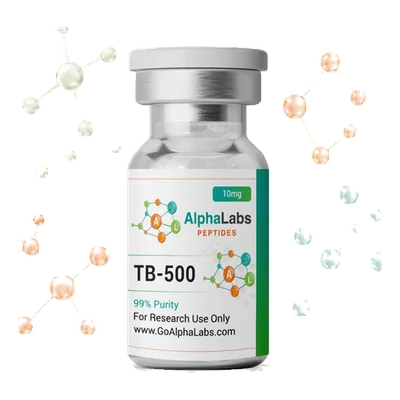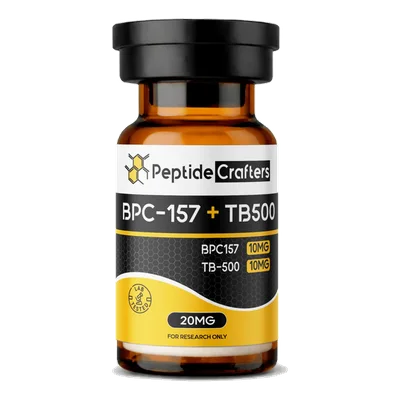
TB-500 is a synthetic peptide sold as a research chemical; FDA identifies it as a seven-amino-acid fragment (LKKTETQ) of thymosin beta-4, a natural 43-amino-acid protein. It isn't approved anywhere, FDA says it has found no human exposure data for it, and WADA bans it in sport at all times. An FDA advisory committee voted 8-6 in July 2026 to recommend it for pharmacy compounding, but FDA hadn't acted on that vote as of October 21, 2026.
Notice: Research peptides are sold for in-vitro laboratory research only. They are not FDA-approved, not for human or animal consumption, and this page is not medical advice. It contains no dosing or use guidance.
TB-500 vs thymosin beta-4
The two names get used interchangeably online. They aren't the same molecule.
| Thymosin beta-4 (Tβ4) | TB-500 | |
|---|---|---|
| What it is | A naturally occurring peptide found in human cells | A synthetic research chemical |
| Length | 43 amino acids | 7 amino acids (LKKTETQ), per FDA |
| Human clinical work | Yes, as RegeneRx's RGN-259 eye drops | None identified by FDA |
| WADA | Prohibited (S2.3) | Prohibited as a Tβ4 derivative (S2.3) |
FDA's compounding safety page (current as of April 22, 2026) lists it as "Thymosin beta-4, fragment (LKKTETQ), also known as TB-500." That's the clearest official definition we found.
Usage isn't consistent, though. Some vendors label the full 43-amino-acid peptide as TB-500, and at least one seller we track offers both under similar names. That matters when you read a certificate, because the two differ in mass several-fold.
What the evidence covers
Thymosin beta-4 (the full protein)
Most published research concerns full-length Tβ4, not the fragment. The clearest human program is RegeneRx's RGN-259, a Tβ4 eye drop. A randomized, placebo-controlled phase 3 study in neurotrophic keratopathy, published in International Journal of Molecular Sciences in 2023, enrolled 18 patients. Complete healing at four weeks occurred in 6 of 10 on RGN-259 versus 1 of 8 on placebo, which the company called a "strong efficacy trend" (RegeneRx via BioSpace). The authors were consultants or partners of RegeneRx. RGN-259 isn't an approved drug.
None of that applies directly to TB-500. A topical eye drop of the full protein is a different product from an injectable research vial of a fragment.
TB-500 (the fragment)
We found no human clinical trial of TB-500. FDA says it "has not identified any human exposure data" on drug products containing the fragment and lacks important safety information (FDA). Much of the published TB-500 literature is from anti-doping labs developing tests to detect it and its metabolites (for example, this LC-MS/MS method work from the Korea Institute of Science and Technology), which tells you more about its use in sport than about its effects.
Doping: banned and enforced
WADA status. The 2026 Prohibited List bans "Thymosin-β4 and its derivatives e.g. TB-500" under S2.3, growth factors, at all times (2026 list text). USADA's advisory on the 2027 list, published October 6, 2026, says TB-500 stays under S2 when the new list takes effect January 1, 2027.
Cases. Two examples show how anti-doping bodies treat it:
- USADA, 2025. Triathlete Anthony McCauley accepted a four-year ban, announced September 17, 2025, for possessing and using BPC-157 and TB-500 and for promoting peptides on social media. USADA says the case began with a whistleblower tip, not a positive test (USADA).
- Essendon, 2016. On January 12, 2016, the Court of Arbitration for Sport upheld WADA's appeal and banned 34 past and present Essendon AFL players for two years over thymosin beta-4 (AFL.com.au). This case concerned Tβ4 rather than TB-500, but both fall under the same S2.3 entry today.
Is TB-500 FDA approved? Regulatory status (October 2026)
- Not approved, and no company has an approved product containing it.
- Out of Category 2. FDA's April 22, 2026 page lists TB-500 among nominations "withdrawn by the nominators." That isn't an approval.
- July 2026 advisory vote. The Pharmacy Compounding Advisory Committee voted 8 yes, 6 no, 1 abstaining to recommend TB-500 for the 503A bulks list (McDermott Will & Schulte; NCPA). FDA staff had recommended against it (Frier Levitt). The vote is non-binding, applies only to licensed pharmacies, and needs rulemaking before it takes effect.
- Still pending. FDA hadn't acted as of October 21, 2026. HHS sent a peptide "interim access policy" to the White House on October 15, 2026, with details unpublished (STAT). We track updates in our regulatory news log.
- Research labels. FDA's 2026 warning letters treat "research use only" peptides as unapproved new drugs when the seller's site shows human use. More in FDA peptide regulation in 2026 and are peptides legal?
Research-grade vials: what the market looks like
As of October 21, 2026, 78 vendors in our TB-500 price index had it in stock, with a median of $7.00 per mg. The lowest per-mg single listings were all 10 mg vials:
| Vendor | Listing | Price | $/mg |
|---|---|---|---|
| Bulk Peptide Supply | TB-500 10mg | $25.00 | $2.50 |
| Anhydrolabs | TB-500 10mg | $32.17 | $3.22 |
| Go Alpha Labs | TB-500 10mg | $34.99 | $3.50 |
Prices are as listed on vendors' sites on October 21, 2026 and change often. A low price doesn't tell you which TB-500 molecule you're getting. TB-500 also appears in blends: see the BPC-157 + TB-500 price page, best BPC-157/TB-500 blend vendors and GLOW and KLOW blends. For single-compound vendors compared on documentation, see best TB-500 vendors.
How to check a TB-500 COA
- Find out which molecule was tested. The certificate should state the sequence or the expected mass. The seven-residue fragment and the 43-residue protein have very different masses, so mass spectrometry settles it.
- Don't rely on HPLC purity alone. A clean peak can describe the wrong peptide (HPLC purity explained).
- Compare measured content to the label (purity vs net content).
- Match the lot number to the vial and check the test date and lab name.
- Look for endotoxin data if it's claimed (endotoxin testing).
Full walkthrough: how to read a peptide COA and the COA checklist.
Bottom line
TB-500 is a name for a synthetic fragment of thymosin beta-4, used loosely enough that some vials hold the full protein instead. The human research that exists is on full-length Tβ4 in a different form, FDA has no human exposure data for the fragment, and anti-doping agencies have banned athletes for both. The July 2026 advisory vote is a step toward pharmacy compounding, not an approval.
Sources are linked inline and were checked October 21, 2026. We'll update this page if FDA acts on the July 2026 vote.