MOTS-c is a 16-amino-acid peptide encoded in mitochondrial DNA, studied mainly in cells and mice as a regulator of metabolism. It isn't an approved drug anywhere. In July 2026 an FDA advisory committee voted 7-5 to recommend it for pharmacy compounding, but FDA hadn't acted on that vote as of October 21, 2026, and WADA bans it in sport at all times.
Notice: Research peptides are sold for in-vitro laboratory research only. They are not FDA-approved, not for human or animal consumption, and this page is not medical advice. It contains no dosing or use guidance.
A peptide encoded by mitochondria
Most proteins in human cells are encoded by DNA in the nucleus. Mitochondria carry their own small genome, and researchers have found short peptides encoded within it. These are called mitochondrial-derived peptides. Humanin, which we also track on our humanin price page, was the first; MOTS-c came later.
The name stands for "mitochondrial open reading frame of the 12S rRNA-c." A University of Southern California team, with Changhan Lee as lead author and Pinchas Cohen as senior author, described it in Cell Metabolism in 2015. The paper reported a 16-amino-acid peptide (sequence MRWQEMGYIFYPRKLR) encoded within the mitochondrial 12S rRNA gene.
What the research covers
The evidence base is mostly preclinical. Here's how it breaks down.
Cell and animal studies
The 2015 paper reported that MOTS-c "primarily targets muscle tissue" in mice, according to USC's summary. In mice fed a high-fat diet, the authors reported that it suppressed weight gain and insulin resistance (Lee et al., 2015). Its link to AMPK, an enzyme that senses cellular energy, is why WADA classes it as a metabolic modulator. Most follow-up work has also been in rodents and cell lines.
Mouse results don't establish what happens in people. Metabolic findings in rodents often fail to carry over to humans.
Human studies
Human data are thin:
| Study | What it was | Status / result | Source |
|---|---|---|---|
| CB4211 phase 1a/1b | CohBar's "novel and improved analog of MOTS-c," not MOTS-c itself; 65 healthy adults (1a), then 20 adults with obesity and fatty liver (1b) | Company topline, August 10, 2021: ALT fell 21% vs 4% on placebo after four weeks; injection site reactions were the only adverse events in over 10% of subjects | CohBar via BioSpace; NCT03998514 |
| MOTS-c phase 2a | Adults with prediabetes and overweight or obesity; insulin sensitivity as the main outcome; sponsor listed as Hudson Biotech | Registered; listed as recruiting at its April 2026 update | NCT07505745 |
The CB4211 numbers come from a company press release on a small, short study, not a peer-reviewed paper. We couldn't confirm whether CohBar is still developing CB4211, so we don't describe its current status. We couldn't load the ClinicalTrials.gov record for NCT07505745 directly; the details above come from a registry mirror of that record.
Is MOTS-c FDA approved? Regulatory status (October 2026)
- Not approved. No drug containing MOTS-c has FDA approval. FDA's compounding safety page (current as of April 22, 2026) says FDA "has not identified any human exposure data" on drug products containing MOTs-C.
- Out of Category 2. The same page lists MOTs-C among nominations "withdrawn by the nominators." That's a change in compounding paperwork, not an approval.
- July 2026 advisory vote. FDA's Pharmacy Compounding Advisory Committee voted 7 yes, 5 no, 2 abstaining to recommend MOTS-c for the 503A bulks list, the substances licensed pharmacies may compound from (McDermott Will & Schulte; NCPA). FDA staff had recommended against it, per Frier Levitt.
- No final FDA action yet. Adding a substance to the bulks list needs rulemaking, and as of October 21, 2026 FDA hadn't acted. HHS sent a peptide "interim access policy" to the White House for review on October 15, 2026; its specifics weren't published (STAT). Our regulatory news tracker logs each step.
- Research labels don't protect sellers. FDA's 2026 warning letters treat "research use only" products as unapproved new drugs when a seller's site shows they're meant for people. See FDA peptide regulation in 2026 and are peptides legal?
WADA: banned at all times
The 2026 WADA Prohibited List names "mitochondrial open reading frame of the 12S rRNA-c (MOTS-c)" under S4.4.1, activators of AMP-activated protein kinase (2026 list text). Metabolic modulators in S4.4 are banned in and out of competition. WADA's 2027 explanatory note says peptides are now named as examples in S0 and urges "utmost caution" with peptides not named on the list.
Research-grade vials: what the market looks like
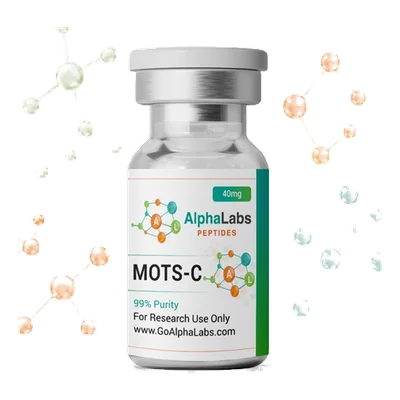
As of October 21, 2026, 87 vendors in our MOTS-c price index had it in stock, with a median of $4.00 per mg. The lowest per-mg listings were 40 mg vials:
| Vendor | Listing | Price | $/mg |
|---|---|---|---|
| Go Alpha Labs | MOTS-C 40mg | $73.49 | $1.84 |
| Southern Aminos | MOTS-C 40mg | $74.25 | $1.86 |
| Maximum Peptides | MOTS-c 40mg | $74.99 | $1.87 |
Prices are as listed on vendors' sites on October 21, 2026 and change often. Price says nothing about identity or purity. Maximum Peptides also sells HGH, HCG and SARMs per its own catalog, which we flag on its review. For vendors compared on documentation, see best MOTS-c vendors.
How to check a MOTS-c COA
A 16-residue peptide is easy to mislabel, and purity alone won't catch the wrong molecule. Check:
- Identity by mass spectrometry. The measured mass should match MOTS-c's 16-amino-acid sequence, not just show a clean HPLC peak. See HPLC purity explained.
- Measured content vs the label. Large vials (40 mg and up) make underfill harder to spot. Our guide to purity vs net content explains the difference.
- A lot number matching the vial, a recent test date and a named lab you can verify.
- Endotoxin results if the vendor claims them (endotoxin testing).
Our COA guide and COA checklist walk through each step.
Bottom line
MOTS-c is a real, published discovery with interesting mouse data and very little human evidence. A non-binding advisory vote in July 2026 opened a possible path to pharmacy compounding, but it isn't approved, isn't on the bulks list yet, and is banned for athletes. A research-labeled vial is an unregulated chemical whose contents depend on the seller and its lab.
Sources are linked inline and were checked October 21, 2026. We'll update this page if FDA acts on the July 2026 vote.