To read a peptide COA (certificate of analysis), check five things in order: who tested it, which lot it covers, when it was tested, how it was tested, and what the result was. Then verify it with the lab. A COA that fails the first two checks, with no named lab or no lot number, can't tell you much about the vial in front of you, whatever purity it shows.
Notice: This guide covers laboratory documentation for research-use-only chemicals. Research peptides are not FDA-approved and not for human or animal consumption. Nothing here is medical advice or guidance on use.
Why COAs matter more in 2026
The research peptide market lost several large vendors in 2025-2026 (timeline), and buyers have moved to smaller, newer sellers. At the same time, fake paperwork has become a documented problem. The Justice Department said Paradigm Peptides falsely marketed its products as tested. Its owner was sentenced to 70 months in July 2026, and a law-firm summary of the case lists falsified certificates of analysis. A COA is a claim. Your job is to check it.
The fields on a COA, one by one
1. Laboratory name and contact details
The single most important field. A legitimate third-party COA names the lab that ran the analysis, and ideally includes an address, accreditation or analyst name. Some vendors name the lab right on their COA page. NextGenPeps, for example, labels each entry in its COA library as Janoshik or BioRegen.
If there's no lab name, you can't verify the document. Treat it as a vendor statement, not third-party evidence. A lab named only on a homepage, and not on the certificate or COA page, is weaker evidence than a lab named on every report.
2. Lot or batch number
Every production batch can differ. A COA should list a lot or batch number that matches the number printed on your vial. Good vendors make this easy. American Peptides, for example, has a lookup tool where you enter the lot number from your vial, and Alpha Pro Peptides lists a lot ID next to every certificate.
If the COA has no lot number, or the same certificate is shown for every batch, it may describe a sample that has nothing to do with what you received.
3. Test date
Check that the date is recent and falls before or around when your batch was produced. A certificate from years ago attached to a product sold today is a warning sign.
4. Compound and declared amount
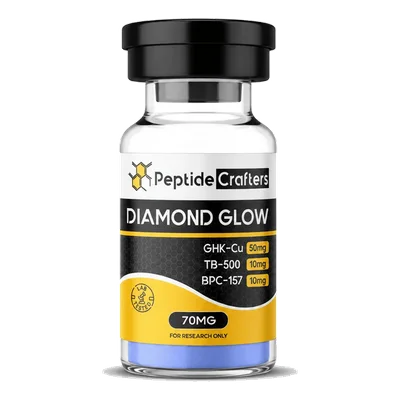
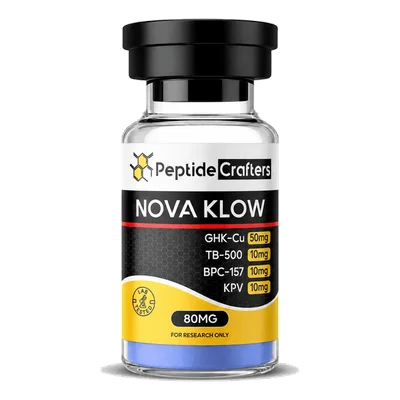
The COA should name the compound exactly and state the declared amount per vial (for example, "5 mg"). If the vendor sells a product under a code name, the COA should still name the actual compound. If it doesn't, you can't tell what was tested. We treat code-named listings as a transparency negative.
5. Purity (usually HPLC)
High-performance liquid chromatography (HPLC) separates a sample into its components. Purity is reported as the main peak's share of the total, for example "99.1%." Things to know:
- Vendors commonly advertise 98-99%+.
- Finnrick, an independent tester, uses 99.5%+ as its passing bar.
- HPLC purity tells you the share of the main compound among the components detected. It doesn't by itself confirm that the main compound is the right one. That's what identity testing is for.
6. Identity (usually mass spectrometry)
Mass spectrometry (MS or LC-MS) checks that the molecule's mass matches the expected compound. A COA with purity but no identity test can report a high purity for the wrong substance. Look for a line such as "identity confirmed" or "mass consistent with theoretical," along with the method.
7. Quantity / net content
Some labs measure how much compound is actually in the vial compared with the label. Finnrick treats a result within ±35% of the label as acceptable. Independent tests often flag underfilled or overfilled vials, and Finnrick's notes on some vendors, such as Swiss Chems, cite underfills.
8. Endotoxin and sterility (less common)
A few vendors publish additional tests, such as bacterial endotoxin (USP <85>) and sterility (USP <71>). For example, some entries in NextGenPeps' COA library include an endotoxin result alongside purity. Their absence doesn't make a COA fake. When they're present, the documentation is more thorough than most.
9. Verification method
The best COAs can be checked with the lab directly. Janoshik has a "Verify" section and puts QR codes on reports. If a vendor's COA comes from a lab with a verification system, use it. If not, email the lab with the report number and ask it to confirm.
Eight red flags on a peptide COA
- No laboratory named, or only "independent certified lab"
- No lot/batch number, or a number that doesn't match your vial
- Old date on a product sold today
- The same COA reused across different products or sizes
- Only purity, no identity test
- Results that are identical across batches, for example every lot showing exactly 99.9%
- A COA "available on request only" that the vendor won't send before purchase
- A report the lab can't or won't confirm when you contact it
Vendor COAs vs independent tests
A COA the vendor commissions shows the sample the vendor chose to send. Independent programs test what customers actually received. Finnrick does this with customer-submitted samples and publishes the results. When a vendor's COAs say 99%+ but independent tests show repeated misses, trust the independent data. We explain both systems in Janoshik vs Finnrick testing.
A five-minute COA check
- Find the vendor's COA page and search for your lot number.
- Confirm the lab name, then look the lab up.
- Check the date, the method (HPLC plus MS) and the declared amount.
- Verify with the lab (verify tool, QR code or email).
- Check the vendor's Finnrick page and its FDA record (warning letter database).
Once a lot checks out, our peptide reconstitution calculator converts the vial's declared mg and the water you add into a concentration and mcg per 0.1 mL, for research use only.
Which vendors make this easy?
Of the vendors we currently list, American Peptides has the easiest lot lookup, NextGenPeps names the lab on every COA entry, Peptide Plugs gives accession codes you can check on the lab's own site, and Alpha Pro Peptides shows lot, purity and net content in one table. PSPeptides shows why a PDF alone isn't enough: the certificate we opened named a lab but listed no accreditation or verification key, and its site's "Verify" page looks up orders, not COAs. See our third-party tested peptides list and the overall rankings.
If a COA lists a counter-ion, TFA vs acetate peptide salts explains what it means.
Updated September 26, 2026. We don't test products ourselves. This guide is based on public lab and vendor documentation.