BPC-157 is a synthetic 15-amino-acid peptide based on a fragment of a protein found in human gastric juice, studied mostly in rats and not approved as a drug anywhere in the US. As of October 21, 2026, an FDA advisory committee has recommended it for pharmacy compounding, but FDA hasn't acted on that vote, and WADA bans it in sport at all times.
Notice: Research peptides are sold for in-vitro laboratory research only. They are not FDA-approved, not for human or animal consumption, and this page is not medical advice. It contains no dosing or use guidance.
What BPC-157 is
BPC stands for "body protection compound." The molecule is a pentadecapeptide with the sequence Gly-Glu-Pro-Pro-Pro-Gly-Lys-Pro-Ala-Asp-Asp-Ala-Gly-Leu-Val. A 2019 review in Cell and Tissue Research describes it as derived from a "human gastric juice-derived protein" and credits its introduction to Sikirić and colleagues in 1993. The same review lists other names used in the literature: Bepecin, PL 14736 and PL10.
The version sold online is made by chemical synthesis. It usually comes as a freeze-dried powder, either as the free base or as an acetate salt. FDA treated those as two separate substances at its July 2026 advisory meeting.
What the research actually shows
Most of what's written about BPC-157 traces back to animal work. Independent reviews agree the human evidence is thin.
| Source | What it covered | Finding |
|---|---|---|
| Gwyer et al., Cell and Tissue Research, 2019 | Soft-tissue healing literature | Studies are "predominantly limited to small animal models"; efficacy "is yet to be confirmed in human subjects" |
| Vasireddi et al., HSS Journal, 2025 | 36 studies on musculoskeletal uses | 35 preclinical studies (mostly rodents) and one retrospective case series of 12 people with knee pain |
| RAPS report on FDA's July 2026 review | FDA staff assessment for compounding | Staff cited a "lack of evidence to support the effectiveness" for ulcerative colitis |
The HSS Journal authors wrote that BPC-157 "shows promise" in preclinical models but that "clinical safety in humans remains unknown." The 2019 review mentions an early ulcerative colitis trial and a 2015 pilot study in healthy volunteers, but says their results weren't available when it was written. We couldn't find published, peer-reviewed results from a randomized controlled trial in humans as of October 21, 2026.
Animal results don't tell you what happens in people. A rat tendon model, a gastric lesion model and a human clinical trial answer different questions, and BPC-157 has mostly been tested in the first two.
Is BPC-157 FDA approved? Regulatory status (October 2026)
No. Here's where each relevant list and process stands.
| Item | Status as of October 21, 2026 | Source |
|---|---|---|
| FDA drug approval | None | No approved application |
| Category 2 ("may present significant safety risks") | Moved to the table of nominations "withdrawn by the nominators"; FDA notes a possible "risk for immunogenicity for certain routes" | FDA, content current as of April 22, 2026 |
| 503A bulks list | Not on it | Holland & Knight, October 16, 2026 |
| July 2026 advisory vote | 8 yes, 6 no, 1 abstaining to recommend both forms; non-binding | Healio |
| Interim compounding policy | Sent to the White House Office of Management and Budget on October 14, 2026; not issued | Holland & Knight |
| WADA | Prohibited at all times under S0 | 2026 Prohibited List |
| DEA | Not a controlled substance | DEA controlled substances list |
How BPC-157 got to the July 2026 vote
FDA placed BPC-157 in Category 2 of its compounding interim policy in 2023, which effectively stopped pharmacies from using it. In April 2026, FDA said it would move 12 peptides off that list and scheduled an advisory review, per a Holland & Knight timeline. FDA's briefing document for the July 23-24, 2026 Pharmacy Compounding Advisory Committee proposed that BPC-157 free base and BPC-157 acetate not be added to the 503A bulks list. It also noted that both nominations had been withdrawn and that FDA presented the substance anyway.
The committee disagreed with FDA staff. It voted 8-6 with one abstention, once for each form, to recommend BPC-157 for ulcerative colitis (Healio). According to RAPS, FDA staff said the substance wasn't well characterized, and FDA had received three adverse event reports it couldn't attribute to BPC-157.
What comes next
Advisory votes don't change the law. Adding a substance to the 503A list takes FDA rulemaking, and Holland & Knight wrote on October 16, 2026 that "formal rulemaking has not begun." The interim access policy sent to OMB on October 14 hadn't been published, so it's not known whether it covers BPC-157. Even a final decision would apply to licensed pharmacies compounding for individual patients. It wouldn't make online "research use only" sales legal for human use. See FDA peptide regulation in 2026 and are peptides legal?
Sport: WADA S0
WADA's 2026 Prohibited List, in effect from January 1, 2026, prohibits substances "with no current approval by any governmental regulatory health authority for human therapeutic use." It names BPC-157 as an example in that S0 class (2026 list). All S0 substances are "Specified Substances" and are banned in and out of competition.
Research-grade vials: what the market looks like
BPC-157 is one of the most widely stocked research peptides. On October 21, 2026, 84 vendors in our price index had it in stock, at a median of $5.50 per mg for single vials. The cheapest per mg were:
| Vendor | Listing | Price | $/mg |
|---|---|---|---|
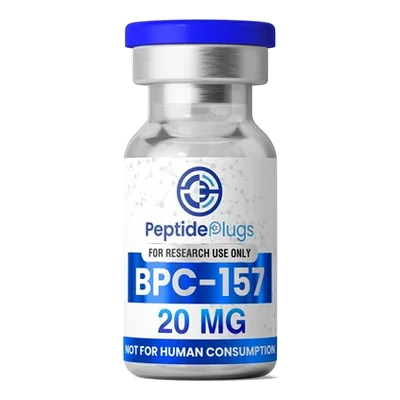
| Peptide Plugs | BPC-157 20mg | $50.00 | $2.50 |
| Peptide Partners | BPC-157 40mg | $104.00 | $2.60 |
| Sunrise BioResearch | BPC-157 10mg | $26.67 | $2.67 |
Prices are as listed on vendors' sites on October 21, 2026, and they change often. Peptide Partners received an FDA warning letter dated August 24, 2026 that cited health claims and the sale of reconstitution supplies. The full list is on the BPC-157 price page, and our documentation comparison is at best BPC-157 vendors. Blends are tracked separately on BPC-157/TB-500 prices.
How to check a BPC-157 COA
A low price means little if you can't tell what's in the vial. Use our COA guide and COA checklist, and look for:
- Identity by mass spectrometry. BPC-157's molecular weight is about 1,419 g/mol. HPLC purity alone can't confirm the right molecule.
- Free base or acetate stated. FDA treats them as different substances, and the salt changes how much peptide a labeled milligram holds. See TFA vs acetate salts.
- Measured content against the label, not just a purity percentage (purity vs net content).
- A lot number that matches the vial and a recent test date.
- A named lab you can verify, ideally with a verification code.
- Endotoxin results if the vendor claims sterility testing (endotoxin testing).
Bottom line
BPC-157 is a widely sold synthetic peptide with a large animal literature and almost no controlled human data. It isn't an approved drug. A July 2026 advisory vote favored allowing pharmacy compounding, but FDA staff opposed it and no final action had been taken by October 21, 2026. WADA bans it in sport. Research-labeled vials vary widely in documentation, so the certificate matters more than the price.
Sources are linked inline and were checked October 21, 2026. We'll update this page when FDA acts on the July vote or publishes its interim peptide policy.