NAD+ (nicotinamide adenine dinucleotide) is a coenzyme that every cell uses to move energy from food into usable form; it's not a peptide and not an FDA-approved drug. As of October 21, 2026, FDA lists it as "under evaluation" for pharmacy compounding, while vials sold online as research NAD+ have no approval or drug-quality oversight behind them.
Notice: Research peptides are sold for in-vitro laboratory research only. They are not FDA-approved, not for human or animal consumption, and this page is not medical advice. It contains no dosing or use guidance.
What NAD+ is
NAD exists in two forms: NAD+ (oxidized) and NADH (reduced). Cells shuttle between them to carry electrons in metabolism. According to the NIH Office of Dietary Supplements, "more than 400 enzymes require NAD to catalyze reactions in the body." Most of those reactions break down nutrients and pass their energy toward ATP production. NAD is also needed by enzymes in other cell functions, and a related coenzyme, NADP, supports building reactions and antioxidant systems.
The body makes NAD from forms of niacin (vitamin B3) and from the amino acid tryptophan. The ODS fact sheet says NAD levels "decline as niacin status deteriorates."
Not a peptide
NAD+ is two nucleotides, one containing nicotinamide and one containing adenine, linked through phosphate groups. There are no amino acids in it, so it isn't a peptide. Peptide vendors stock it anyway, and some label it a peptide, so our index tracks it.
NAD+ vs NMN and NR
Nicotinamide mononucleotide (NMN) and nicotinamide riboside (NR) are precursors the body can convert to NAD+. They're sold as oral supplements. FDA's position on NMN changed: in letters dated September 29, 2025, it concluded NMN isn't excluded from the dietary supplement definition, because it was marketed as a supplement before it was authorized for drug investigation (Venable). That ruling covers oral supplements. It says nothing about injectable NAD+.
What research on NAD+ itself shows
Interest in NAD+ comes largely from laboratory and animal work linking NAD+ levels to aging and metabolism. Direct human data on NAD+ given by infusion is limited.
The most cited human study is a 2019 pilot in Frontiers in Aging Neuroscience (Grant et al.). It randomized 11 healthy men aged 30 to 55 to an intravenous NAD+ infusion (8) or saline (3) and measured NAD+ and its breakdown products in blood and urine.
- Plasma NAD+ didn't change for the first two hours. The authors concluded it was being cleared or broken down quickly.
- By the end of the infusion, plasma NAD+ was about 398% above baseline and stayed elevated two hours later.
- No adverse events were observed in either group. Some liver markers shifted, but the authors wrote that "none of the changes were considered clinically significant."
That's a small, short pharmacokinetic study. It didn't test health outcomes. We didn't find a large randomized outcome trial of injected NAD+ as of October 21, 2026.
Is NAD+ FDA approved? Regulatory status (October 2026)
| Item | Status | Source |
|---|---|---|
| FDA drug approval | None for injectable NAD+ | No approved application |
| 503A (pharmacies) | Category 1, "under evaluation"; NADH is also Category 1 | FDA 503A categories list, updated May 14, 2026 |
| 503B (outsourcing facilities) | Not on the 503B bulks list | FDA warning letter, January 20, 2026 |
| Category 2 safety list | Not listed | FDA |
| WADA 2026 list | Not named (method M2.2 limits large IV infusions) | 2026 Prohibited List |
What Category 1 means
For Category 1 substances, FDA says it "does not intend to take action against a compounder" if the conditions in its interim guidance are met (FDA, content current as of May 14, 2026). That's enforcement discretion for state-licensed pharmacies filling individual prescriptions while FDA evaluates the substance. It isn't an approval, and it doesn't cover research chemical sellers.
The GenoGenix warning letter
FDA's January 20, 2026 letter to GenoGenix LLC, an outsourcing facility in Boca Raton, Florida, is the clearest primary-source look at what can go wrong with injectable NAD+. FDA said NAD+ isn't eligible for the 503B exemptions because it doesn't appear on the 503B bulks list. The letter also describes a complaint that three patients who received NAD+ from the same vial developed symptoms including low blood pressure and shaking, and were sent to an emergency room. An unopened vial from that lot "was found to contain excessive bacterial endotoxins," at 3,360 EU/mL.
That case involved a compounder working under drug manufacturing rules. Research-labeled vials have no such oversight, which is why endotoxin testing on a certificate matters (see endotoxin testing).
"Research use only" labels
FDA judges a product by its intended use, not just its label. When a seller's website shows a product is meant for people, FDA treats it as an unapproved new drug. More in FDA peptide regulation in 2026 and are peptides legal?
Research-grade vials: what the market looks like
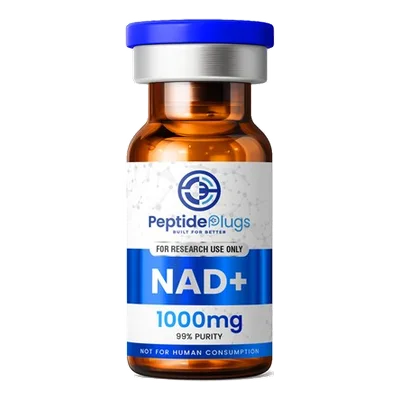
NAD+ is cheap per milligram compared with peptides because vials are large. On October 21, 2026, 83 vendors in our price index had NAD+ in stock, at a median of $0.12 per mg. The cheapest per mg were:
| Vendor | Listing | Price | $/mg |
|---|---|---|---|
| Bulk Peptide Supply | NAD 1000mg | $35.00 | $0.04 |
| Peptide Plugs | NAD 1000mg | $45.00 | $0.04 |
| Hacker Peptides | NAD+ Buffered 500mg | $26.43 | $0.05 |
Prices are as listed on vendors' sites on October 21, 2026, and they change often. See the NAD+ price page for every listing and best NAD+ vendors for our certificate comparison.
How to check an NAD+ COA
- Identity by mass spectrometry or a reference standard. NAD+ has a molecular weight of about 663 g/mol. NADH, NMN and NAD+ salts are different substances.
- Salt or "buffered" form explained. If a salt or buffer counts toward the labeled weight, the vial holds less NAD+ than the label suggests. The certificate should say which form was measured.
- Measured content against the label, since large vials make small percentage underfills add up.
- Endotoxin result. The GenoGenix case shows why.
- A lot number matching the vial and a named lab you can check.
Our COA guide and COA checklist cover the rest.
Bottom line
NAD+ is a coenzyme central to cell metabolism, not a peptide. There's no FDA-approved NAD+ injection. Pharmacies can compound it under FDA's Category 1 enforcement discretion while FDA evaluates it, outsourcing facilities can't compound it from bulk, and research-labeled vials sit outside both systems. Human data on infused NAD+ is limited to small studies like the 2019 pilot.
Sources are linked inline and were checked October 21, 2026. We'll update this page if FDA decides on NAD+ for the 503A bulks list.